
 See Our Latest Article on HelloNation
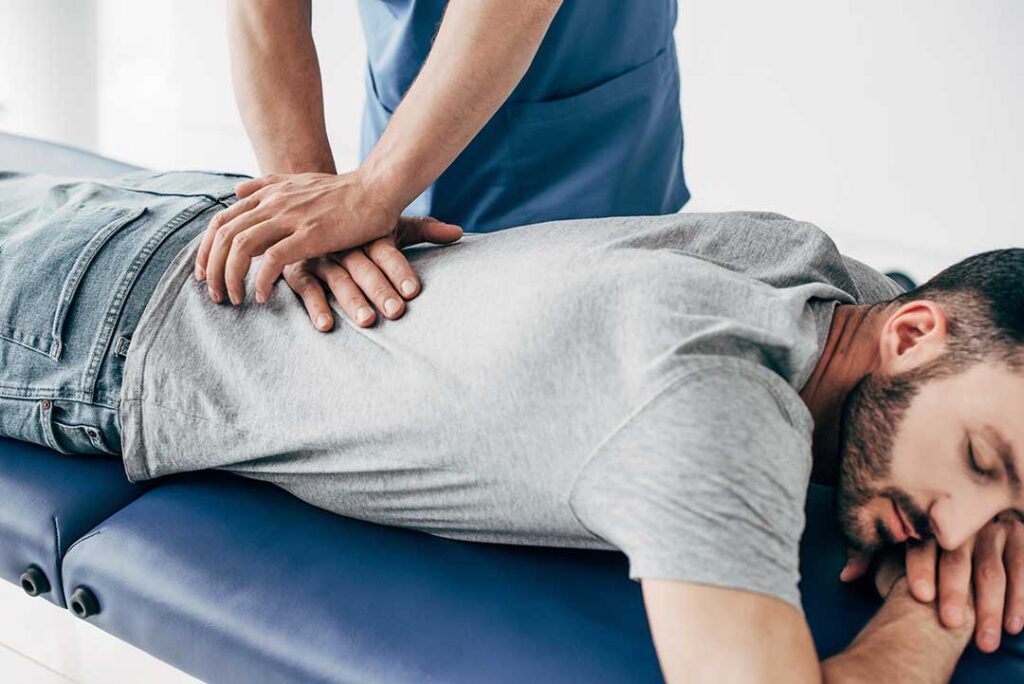
What is the Graston Technique?
The Graston Technique is a form of instrument-assisted soft-tissue mobilization, often abbreviated as IASTM. It uses smooth, handheld tools along with manual pressure and movement to assess and treat muscles, tendons, fascia, and other soft tissues.
A clinician typically glides the instrument over a targeted area while looking for changes in tissue texture, sensitivity, or movement. The technique may be used as one part of a broader chiropractic or rehabilitation plan rather than as a stand-alone treatment.
The instruments do not “break up” scar tissue in a literal mechanical sense. That explanation is commonly used in promotional descriptions, but the biological effects of IASTM are not fully established. Possible effects may include temporary changes in pain sensitivity, muscle tone, local circulation, and tolerance for movement. ([pubmed.ncbi.nlm.nih.gov](https://pubmed.ncbi.nlm.nih.gov/27713575/?utm_source=openai))
How is it used in chiropractic care?
Graston Technique is generally directed at soft tissues, not at the bones or joints themselves. A chiropractic visit that includes it may also involve movement testing, hands-on joint mobilization, exercise instruction, posture assessment, or other conservative care.
The purpose is usually to make a painful or restricted movement easier. For example, a clinician might use soft-tissue work around the calf when ankle motion is limited, around the forearm when gripping is painful, or along the back and hip muscles when movement feels stiff.
The technique should be connected to a specific functional goal, such as:
- Improving a measured range of motion
- Making walking, lifting, reaching, or climbing stairs more comfortable
- Reducing tenderness in an irritated muscle or tendon
- Supporting a gradual return to normal activity
A treatment plan should not rely on the appearance of the skin alone. Temporary redness or discoloration does not prove that damaged tissue has been removed or that healing has accelerated.
What does a treatment session feel like?
Most people describe the pressure as firm, scraping, or mildly uncomfortable rather than sharply painful. The instrument is usually applied with lotion or another medium to allow controlled movement across the skin.
Mild tenderness, redness, or bruising can occur afterward. These effects may be more noticeable when the tissue is already sensitive or when excessive pressure is used. Significant pain, marked swelling, numbness, weakness, or symptoms that continue to worsen should not be treated as a normal response.
The clinician should explain what area is being treated, what sensations to expect, and how the response will be monitored. Pressure can often be adjusted, and treatment should not be forced through intense pain.
Can it help back, neck, shoulder, or joint pain?
The evidence is mixed, and results depend on the condition being treated. Some research has found short-term improvements in range of motion or pain, while other reviews have found little or no clinically meaningful advantage over exercise, usual rehabilitation, or other active treatments.
A 2016 systematic review found limited evidence and noted that several studies did not show better outcomes than comparison treatments. A later review reported potentially favorable effects for some pain and function measures, but a 2022 updated review concluded that the overall evidence was very low quality and did not show meaningful improvements across many musculoskeletal conditions. ([pubmed.ncbi.nlm.nih.gov](https://pubmed.ncbi.nlm.nih.gov/27713575/?utm_source=openai))
Research focused specifically on the Graston Technique for low-back and thoracic pain remains preliminary. A 2025 systematic review found reduced pain compared with placebo in a small body of research, but it did not establish that the technique was better than active treatments or that it reliably improved disability. ([pubmed.ncbi.nlm.nih.gov](https://pubmed.ncbi.nlm.nih.gov/40549553/?utm_source=openai))
For residents managing physically demanding work, winter-related activity, gardening, home maintenance, or recreational exercise, the practical question is whether the treatment improves useful movement over time. Relief that lasts only a few hours may be less meaningful than steady progress in strength, mobility, and daily function.
Is bruising a sign that the technique worked?
No. Bruising is a possible side effect, not a reliable measure of effectiveness.
A bruise indicates that small blood vessels near the surface of the skin have been disturbed. It does not demonstrate that adhesions were removed, that inflammation was corrected, or that an injury is healing faster. Some people bruise easily because of age, medication, skin sensitivity, or medical conditions.
A careful approach uses the least force needed to address the treatment goal. Repeated aggressive treatment that causes substantial bruising deserves re-evaluation, especially if symptoms are not improving.
Who may need to avoid or modify it?
Instrument-assisted soft-tissue treatment may not be appropriate over an open wound, active skin infection, acute swelling, a recent fracture, or an area with unexplained severe pain. Extra caution may be needed for people with bleeding disorders, reduced sensation, fragile skin, vascular problems, or conditions affecting tissue healing.

People taking anticoagulant or antiplatelet medication should disclose that information before treatment because bruising and bleeding risk may be higher. Pregnancy, cancer treatment, recent surgery, and significant medical conditions may also require individualized decisions.
These precautions do not mean that every person with a medical condition must avoid hands-on care. They mean the technique should be selected only after reviewing health history, medications, symptoms, and the likely cause of the pain.
How does it differ from spinal manipulation?
Graston Technique works mainly on soft tissues using an instrument. Spinal manipulation uses a controlled force directed at a spinal joint and may involve a thrust. These are different procedures, although they may be offered during the same course of care. ([nccih.nih.gov](https://www.nccih.nih.gov/health/spinal-manipulation-what-you-need-to-know?utm_source=openai))
Neither technique should be assumed to be appropriate simply because pain is present. A proper assessment should consider whether symptoms come from muscle or tendon irritation, a joint problem, nerve involvement, fracture, infection, or another condition requiring medical evaluation.
For neck symptoms in particular, people should understand that spinal manipulation has different risks from soft-tissue mobilization. The National Center for Complementary and Integrative Health reports that temporary soreness, stiffness, or headache can occur after spinal manipulation, while serious complications are rare but have been reported. ([nccih.nih.gov](https://www.nccih.nih.gov/health/spinal-manipulation-what-you-need-to-know?utm_source=openai))
What should residents ask before treatment?
Useful questions include:
- What specific problem is this intended to address?
- How will improvement be measured?
- What other treatments, especially exercise or activity modification, are recommended?
- How much soreness or bruising is expected?
- What symptoms would mean treatment should stop?
- Are medications or medical conditions relevant to safety?
- What is the plan if there is no meaningful improvement?
The strongest role for Graston Technique is usually as a limited, goal-directed addition to active care. Exercise, gradual activity, sleep, work adjustments, and education often matter more for lasting function than any single hands-on method. Current research does not support treating the technique as a cure-all or as proof that scar tissue is being physically removed. ([pubmed.ncbi.nlm.nih.gov](https://pubmed.ncbi.nlm.nih.gov/35611579/?utm_source=openai))
For people in Shawangunk, seasonal changes can affect activity levels and physical demands. Snow clearing, uneven outdoor surfaces, long periods indoors, and sudden increases in spring or summer activity can all contribute to muscle and tendon irritation. A sensible treatment plan should account for those everyday patterns while emphasizing safe movement and measurable recovery.
